
Build Your Avian DNA Testing Laboratory | PCR & qPCR Setup Guide
Build Your Avian DNA Testing Laboratory
A Comprehensive PCR & qPCR Setup Guide for Professionals & Breeders
This guide explains how to establish a small to medium-scale avian molecular diagnostics laboratory for bird DNA testing and pathogen detection. It is designed for poultry breeders, pigeon loft managers, avian researchers, wildlife organizations, and laboratory startups.
The focus is on practical implementation of PCR and real-time PCR (qPCR) systems for genetic testing and infectious disease screening in birds.
1. Overview of Avian Molecular Laboratory Applications
A functional avian DNA laboratory can support both genetic analysis and pathogen detection workflows.
- Bird sex identification using CHD gene PCR analysis
- Avian viral screening (PBFD, PPMV-1, PiHV, APV)
- Bacterial and fungal detection in avian populations
- Protozoan infection screening (e.g., Trichomonas)
- Genetic research in breeding and lineage studies
These applications are based on nucleic acid detection technologies including PCR and RT-PCR.
2. Laboratory-Level Testing Methods
| Method | Feasibility Outside Professional Lab | Main Applications | Notes |
|---|---|---|---|
| Conventional PCR | Yes | Sex identification, basic virus detection | Requires gel electrophoresis system |
| Real-Time PCR (qPCR) | Partially | Viral quantification, sensitive detection | Requires real-time PCR instrument |
| Sanger / NGS Sequencing | No | Mutation analysis, genome research | Requires certified sequencing laboratory |
| STR / SNP Parentage Testing | No | Lineage verification | For forensic-level laboratories |
PCR and qPCR represent the core technologies suitable for independent laboratory setups.
3. PCR vs qPCR Operational Structure
| Step | Conventional PCR | Real-Time PCR (qPCR) |
|---|---|---|
| Sample preparation | DNA extraction required | DNA extraction required |
| Reaction system | DNA + primers + polymerase + buffer | Same system with fluorescent probe or dye |
| Amplification platform | Thermal cycler | Real-time fluorescence detection system |
| Detection method | Gel electrophoresis visualization | Fluorescence signal (Ct value analysis) |
| Output type | Qualitative result | Quantitative or semi-quantitative result |
PCR provides endpoint detection, while qPCR enables real-time monitoring and higher sensitivity.
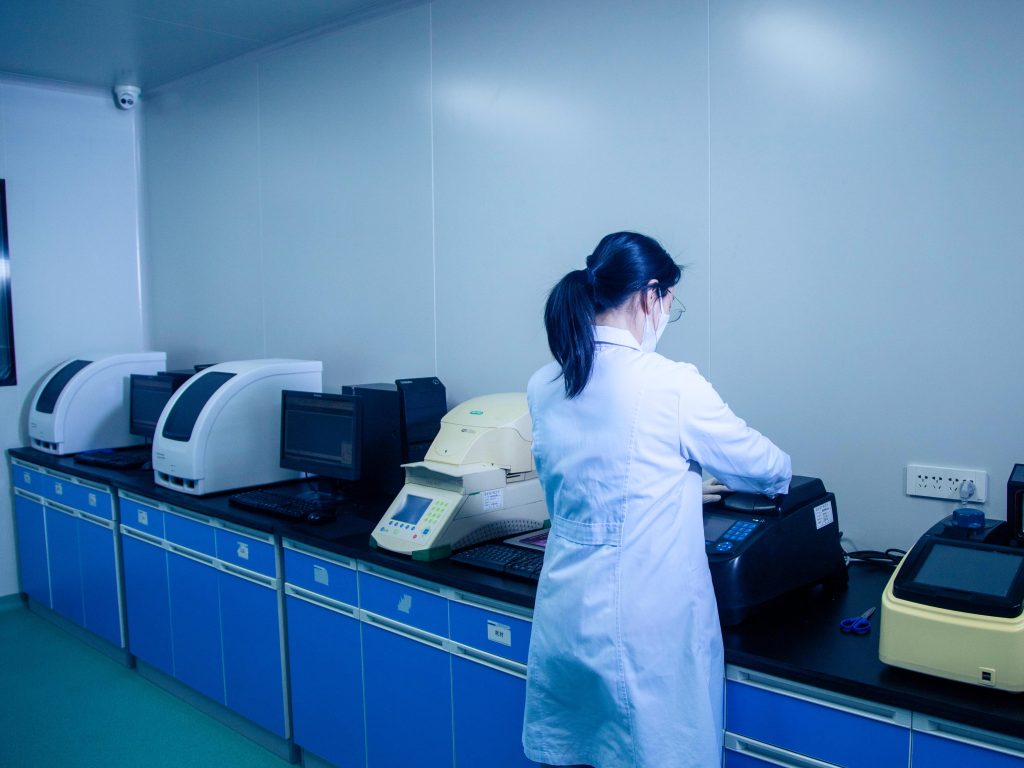
4. Equipment Required for Avian DNA Laboratory
Core Instruments
- PCR thermal cycler (standard or mini format)
- Real-time qPCR system (advanced setup)
- Microcentrifuge
- Adjustable micropipettes
- Gel Electrophoresis System (Tank & Power Supply) — For Conventional PCR workflow
- Gel UV/Blue Light Transilluminator / Imaging System
Detection Systems
- Gel electrophoresis apparatus (PCR-based workflows)
- Gel imaging system (UV or blue light)
Laboratory Infrastructure
- Nuclease-free working environment
- Separate pre-PCR and post-PCR areas
- Sample storage refrigeration system
- Optional laminar flow hood for contamination control
5. Reagents and Consumables
A complete avian molecular testing system requires standardized reagents and consumables.
DNA Extraction
- Feather or blood DNA extraction kits
- Lysis buffer systems
PCR Components
- PCR master mix
- Target-specific primers (e.g., CHD gene, viral genes)
- Nuclease-free water
qPCR Components
- Fluorescent dyes (SYBR Green or TaqMan probes)
- Internal amplification controls
Integrated reagent systems can simplify workflow and reduce contamination risk in small laboratories.
Racing Pigeon Performance Gene Testing (qPCR Probe or Conventional PCR/Electrophoresis assays applied per marker requirements)
6. Estimated Laboratory Setup Cost
| System Level | Configuration | Estimated Cost (USD) |
|---|---|---|
| Basic PCR Lab | 16-well PCR system | 800 – 1,200 |
| Intermediate qPCR Lab | 32-well real-time PCR system | 1,800 – 3,000 |
| Advanced qPCR Laboratory | 96-well high-throughput system | 5,000 – 10,000+ |
Cost variation depends on throughput capacity, automation level, and detection system integration.
7. Laboratory Environment Requirements
- Stable temperature control (18–25°C)
- Low contamination and dust-free environment
- Separated workflow areas for pre-PCR and post-PCR processes
- Dedicated pipettes for different workflow stages
- Uninterruptible power supply (UPS)
Optional upgrades include HEPA filtration systems and UV sterilization units for contamination control.
8. Standard Workflow for Avian DNA Testing
Step 1: Sample Collection
- Feather follicle samples
- Blood samples (capillary collection)
- Oral or cloacal swabs for pathogen detection
Step 2: DNA Extraction
Use spin-column or lysis-based extraction systems. Processing time is typically 30–45 minutes.
Step 3: Reaction Setup
Prepare PCR or qPCR reaction mix including primers, master mix, and extracted DNA.
Step 4: Amplification
PCR cycles typically run for 90 minutes. qPCR systems perform real-time fluorescence monitoring.
Step 5: Result Analysis
- PCR: Gel electrophoresis band analysis
- qPCR: Ct value interpretation and amplification curve analysis
9. Scientific Interpretation Principle
Molecular laboratory testing provides analytical detection results and does not replace veterinary diagnosis.
Final interpretation should consider biological context, flock history, environmental conditions, and professional veterinary evaluation when required.
10. Practical Value of Building an Avian DNA Laboratory
Establishing a small-scale avian molecular laboratory is suitable for users requiring:
- Frequent genetic or pathogen testing
- Reduced dependency on external laboratories
- Faster turnaround time for results
- Improved breeding management decisions
- Controlled research or flock monitoring systems
With appropriate equipment and workflow design, a compact laboratory can support both genetic analysis and infectious disease screening in avian populations.
Small Avian PCR Laboratory Equipment Checklist
(Bird Gender Testing / Virus Testing / Racing Pigeon Performance Gene Testing)
This checklist is designed for a small molecular biology laboratory focused on:
- Bird gender DNA testing
- PBFD and Polyomavirus screening
- Racing pigeon performance gene testing
- Feather-based PCR workflows
- RT-PCR and conventional PCR applications
This setup does NOT include:
- DNA fingerprinting
- Sequencing analysis
- Next-generation sequencing (NGS)
- STR profiling systems
If antibody or serology testing is added in the future, additional ELISA-related equipment will be required.
1. Core Laboratory Instruments
Essential PCR Equipment
- Real-Time Fluorescent Quantitative PCR System (RT-PCR Machine)
- Conventional PCR Thermal Cycler
- Mini Centrifuge
- Refrigerated Centrifuge (recommended)
- Vortex Mixer / Mini Mixer
- Dry Bath / Hot Lid Metal Bath
- Refrigerator
- Low Temperature Freezer / Cryogenic Freezer
- Ice Box / Cooling Block
2. Pipetting Equipment
Micropipettes
- 0.5–10 μL Pipette
- 10–100 μL Pipette
- 100–1000 μL Pipette
Pipette Consumables
- Filter Pipette Tips (10 μL)
- Filter Pipette Tips (100 μL)
- Filter Pipette Tips (1000 μL)
3. DNA Extraction Equipment & Reagents
Extraction Equipment
- Mini Centrifuge
- Tube Mixer
- Heating Block
DNA Extraction Reagents
- Rapid Genomic DNA Extraction Kit
- Lysis Buffer
- Proteinase K
- Nuclease-Free Water
- DNA Preservation Buffer (optional)
4. PCR Detection Reagents
Bird Gender Testing
- Bird Gender PCR Reagent Kit
Virus Detection
- PBFD Detection Reagent Kit
- Avian Polyomavirus Detection Reagent Kit
Racing Pigeon Performance Gene Testing
Examples may include:
- LDHA Gene Detection Kit
- DRD4 Gene Detection Kit
- CRY1 Gene Detection Kit
General PCR Reagents
- PCR Master Mix
- RT-PCR Master Mix
- Positive Controls
- Negative Controls
- Internal Controls
5. Sample Collection Supplies
Feather Sampling Tools
- Tweezers
- Scissors
- Sterile Collection Bags
- Sample Envelopes
- Ziplock Bags
Sample Identification
- Barcode Labels
- Waterproof Stickers
- Permanent Markers
- Sample Submission Forms
6. Plastic Consumables
PCR Consumables
- 0.2 mL PCR Tubes
- 0.2 mL 8-Strip PCR Tubes
- PCR Tube Caps
Centrifuge Tubes
- 1.5 mL Tubes
- 2.0 mL Tubes
Tube Storage
- PCR Tube Rack
- EP Tube Rack
- Cryogenic Storage Box
7. Contamination Control & Laboratory Safety
Personal Protective Equipment
- Disposable Gloves
- Disposable Masks
- Lab Coats
- Protective Eyewear
Cleaning & Decontamination
- Nucleic Acid Contamination Scavenger
- Disinfectant Alcohol
- DNA/RNA Surface Cleaner
- UV Sterilization Lamp
- Spray Bottles
8. Laboratory Workspace Supplies
- Desktop Trash Can
- Biohazard Garbage Bags
- Paper Towels
- Kimwipes / Lint-Free Tissue
- Timer
- Laboratory Notebook
- Storage Containers
9. Cold Storage & Sample Preservation
- Refrigerator
- Low Temperature Freezer
- Ice Packs
- Cooler Box
- Sample Storage Bags
10. Recommended Laboratory Area Separation
To reduce contamination risk, many PCR laboratories separate workflows into different zones.
Area A — PCR Reagent Preparation (Clean Zone): Master mix preparation and clean aliquot handling. No template DNA allowed.
Area B — Sample Preparation & DNA Extraction (Buffer Zone): Feather handling, lysis, and biological sample extraction.
Area C — PCR Amplification & Analysis (Post-PCR Zone): Real-time qPCR instrumentation, thermal cyclers, and data visualization.
11. Computer & Data Equipment
- Desktop Computer or Laptop
- Printer
- Label Printer (optional)
- UPS Backup Power Supply
12. Optional Equipment for Higher Throughput
- Biosafety Cabinet / PCR Clean Bench
- Plate Centrifuge
- Tube Rotator
- Magnetic Rack
- Automatic Pipette Controller
13. What This Laboratory Setup Does NOT Include
This laboratory configuration does not include equipment for:
- DNA Fingerprinting
- STR Genotyping
- Sequencing Analysis
- Sanger Sequencing
- Next-Generation Sequencing (NGS)
- Whole Genome Analysis
These applications require additional specialized instruments and bioinformatics workflows.
14. Additional Equipment Required for Antibody / ELISA Testing
If the laboratory plans to add antibody detection or serology testing in the future, additional immunoassay equipment will be required.
ELISA / Antibody Testing Equipment
- Microplate Reader / ELISA Reader
- Microplate Washer
- Incubator
- Adjustable Multi-Channel Pipette
- ELISA Plates
- Plate Shaker
ELISA Reagents
- ELISA Detection Kits
- Wash Buffer
- Substrate Solution
- Stop Solution
- Positive & Negative Controls
15. Practical Notes From Laboratory Experience
In practical avian PCR workflows:
- Fresh feather samples usually provide better DNA quality
- Multiple feathers help reduce weak amplification issues
- Cross-contamination control is extremely important
- RT-PCR is commonly preferred for routine screening due to sensitivity and workflow speed
- Conventional PCR is often used as supplementary verification
For breeder support projects, laboratories often recommend:
- Multiple birds sampled per aviary or cage group
- Several freshly plucked feathers per bird
This approach helps reduce the possibility of false negative results during periods of low viral shedding or uneven sample quality.
FAQ
1. What is an avian DNA test laboratory?
An avian DNA test laboratory is a molecular biology laboratory designed to perform bird genetic testing, including avian gender identification, parentage analysis, and performance-associated genetic testing using PCR or fluorescent qPCR technology.
2. What equipment is required to build an avian DNA testing lab?
A basic avian DNA laboratory may require:
- PCR or fluorescent qPCR instrument
- Centrifuge
- Micropipettes
- Mini vortex mixer
- Dry bath or heating block
- Refrigeration and freezer storage
- DNA extraction reagents
- PCR consumables and laboratory plastics
Higher-throughput laboratories may also use automated extraction systems and multi-channel pipetting workflows.
3. What is the difference between traditional PCR and fluorescent qPCR?
Traditional PCR usually requires agarose gel electrophoresis to visualize amplification results, while fluorescent qPCR monitors amplification signals automatically in real time using fluorescence detection systems.
4. Why do modern avian DNA laboratories prefer fluorescent qPCR?
Fluorescent qPCR offers:
- Faster workflow
- Higher sensitivity
- Better repeatability
- Reduced contamination risk
- Real-time amplification analysis
- Easier high-throughput processing
These advantages make qPCR especially suitable for commercial bird DNA testing laboratories.
5. Can a small laboratory perform bird DNA testing?
Yes. Small-scale laboratories can perform avian DNA testing using compact PCR or qPCR systems. Many breeder-operated laboratories begin with low-throughput workflows before expanding capacity.
6. Is fluorescent qPCR expensive for startup laboratories?
Modern compact qPCR instruments have become more affordable compared with earlier laboratory systems. Small laboratories can now build basic qPCR testing workflows with relatively moderate startup investment.
7. What samples are commonly used in avian DNA testing?
Freshly plucked feather follicles are the most commonly used samples. Blood and tissue samples may also be used depending on laboratory protocols.
8. Why are feather follicles important?
The feather follicle contains living cells with genomic DNA required for molecular analysis. Feathers without intact follicles may not provide sufficient DNA quality for reliable PCR amplification.
9. Can naturally shed feathers be used for testing?
Naturally shed feathers are generally not recommended because degraded follicles may contain insufficient or damaged DNA.
10. What is the CHD gene in avian DNA testing?
The CHD (Chromodomain Helicase DNA-binding) gene is commonly used for bird gender identification because it differs between avian Z and W sex chromosomes.
11. What is crude extraction in avian DNA testing?
Crude extraction is a simplified DNA preparation method that uses reagent-based cell lysis instead of column purification. It improves workflow efficiency and reduces testing costs.
12. Does crude extraction reduce testing accuracy?
No. Optimized crude extraction methods can provide DNA quality sufficient for fluorescent qPCR-based avian gender testing when properly validated.
13. What is Ct value in qPCR testing?
Ct (Cycle threshold) value refers to the PCR cycle number at which fluorescence signals rise above background levels. It helps evaluate amplification quality and DNA concentration.
14. What are amplification curves?
Amplification curves are graphical representations of fluorescence increases during qPCR cycling. They help laboratory analysts evaluate amplification reliability and reaction performance.
15. Why do laboratories retest some samples?
Samples with weak, borderline, or abnormal amplification signals may be retested to improve analytical reliability and reduce false interpretation risk.
16. What is laboratory quality control in avian DNA testing?
Quality control (QC) refers to procedures used to monitor testing consistency, repeatability, contamination control, and analytical reliability throughout the laboratory workflow.
17. Can contamination affect avian PCR testing?
Yes. External DNA contamination or mixed feather samples may interfere with PCR analysis. Proper sample handling and workflow separation are important.
18. Is avian DNA testing scientifically accepted?
Yes. PCR-based avian DNA testing is widely used in molecular biology laboratories, veterinary diagnostics, breeding programs, zoological facilities, and avian research institutions worldwide.
19. Can breeders build their own bird DNA laboratory?
Yes. Some breeders and distributor networks establish small in-house laboratories to improve testing turnaround time, reduce outsourcing costs, and expand local testing services.
20. Is bird DNA testing suitable for large-scale laboratory workflows?
Yes. High-throughput fluorescent qPCR systems can efficiently process large numbers of avian DNA samples and are commonly used in commercial testing laboratories.
21. Can I purchase a complete, turn-key laboratory setup including instruments and reagents directly?
Yes. SENO Biotech offers customized, turnkey solutions. We provide not only the compatible qPCR thermal cyclers and high-precision micropipettes, but also the entire catalog of validated primer/probe kits (Gender, Pathogens, and Pigeon Performance Genes) to get your laboratory operational instantly.
22. Do you provide training or technical support for startup laboratories?
Absolutely. All contract laboratories and bulk reagent distributors receive comprehensive standard operating procedures (SOPs), troubleshooting guides, and remote technical consultation from our application specialists to ensure your staff achieves >99.9% analytical accuracy.